Scheduling And Write Safety
The external orchestrator decides what starts at the same time. Firecube enforces write safety inside each command with ChunkManager records and write claims.
The scheduling question is always the same: do these commands write different parts of the product, or can they touch the same write domain?
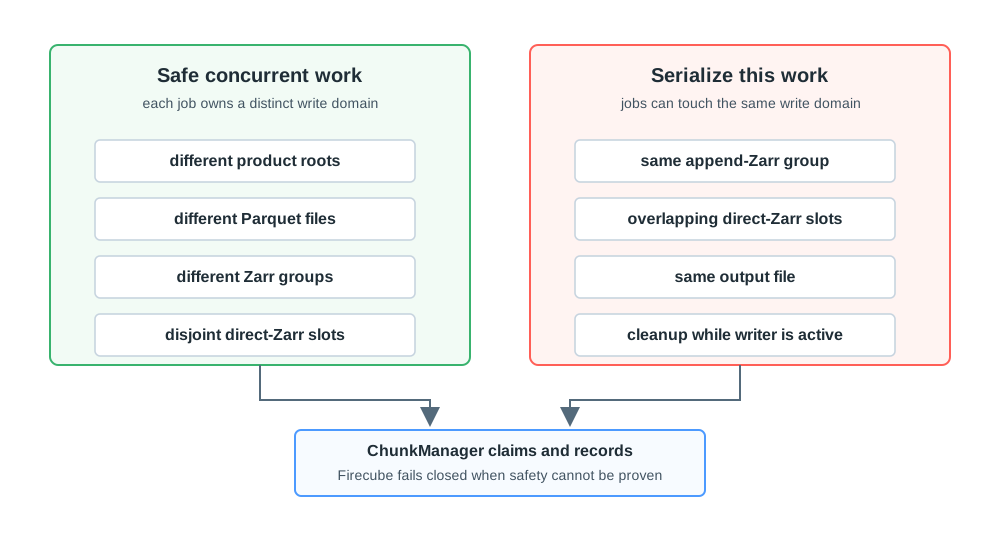
Safe Concurrent Work
These can run concurrently when each job owns a distinct write domain:
- different product roots;
- different Parquet output files or partitions;
- different Zarr groups when the plugin and write strategy allow it;
- disjoint, chunk-aligned
DirectZarrIngestorslot ranges.
Work To Serialize
Run these sequentially:
- two append-Zarr writers mutating the same group;
- overlapping direct-Zarr slot ranges;
- two jobs writing the same output file;
- cleanup, claim clearing, or span deletion while a writer is still active.
For append-Zarr products, source dates alone do not prove safety. If two jobs append to the same Zarr group, they still share the write domain.
What Firecube Does
Firecube fails closed when it sees unsafe state. It blocks active conflicting runs, rejects overlapping or chunk-misaligned direct-Zarr slot ranges, and requires stale claims to be handled before work continues.
The external orchestrator still has to choose the schedule. When it cannot prove jobs are disjoint, run them sequentially.
Next Steps
- Parallelism — choose workers and write domains by plugin class
- Parallel Zarr Writes — operate
DirectZarrIngestorslot workers - Recover Runs And Claims — recover stuck runs or stale claims
- ChunkManager Operations — inspect runs, claims, spans, or snapshots