Execution Shapes
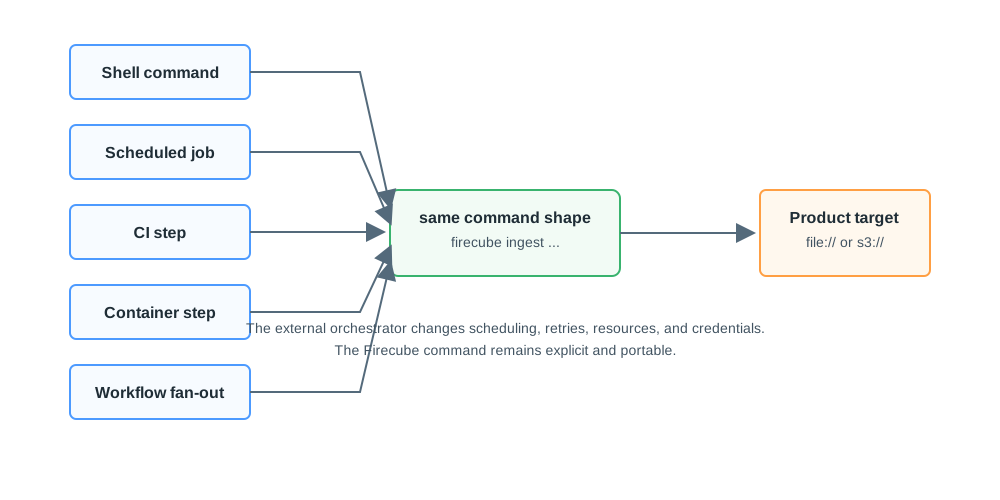
Firecube can run anywhere the firecube CLI can run. The command stays explicit;
the external orchestrator changes how it is scheduled, retried, and connected
to storage.
Common Shapes
- One shell command fits local development, manual checks, and one-off ingestion.
- Scheduled command fits periodic ingestion when one command is enough.
- CI job fits repeatable test or release workflows where logs and artifacts are already collected.
- Container step fits environments where dependencies, credentials, and workspace paths are supplied by the container runtime.
- Multi-step workflow fits discovery, ingest, validation, catalog publishing, or notification steps that must run in order.
- Fan-out workflow fits independent products, groups, partitions, or direct-Zarr slot ranges that can run concurrently.
Use a workflow system when you need dependencies, resource policy, secrets, fan-out, or retries across multiple Firecube commands. Firecube does not require or ship a tested integration for a specific scheduler.
Multi-Step Runs
A common workflow has several steps around ingestion:
Firecube owns the ingest step. The external orchestrator owns the order, resources, and shared storage access between steps.
Practical Rule
Keep the command portable:
- pass required CLI flags explicitly;
- inject secrets through the external orchestrator environment;
- mount or configure source and target storage before the command starts;
- keep stdout, stderr, and logs available after the command exits.
Next Steps
- Orchestrator Contract — understand the ownership split
- Scheduling And Write Safety — decide what can run in parallel
- Run Ingestion — start from a concrete command
- Production Guide — choose production defaults around the command