ChunkManager Records
ChunkManager is Firecube's lifecycle record for one product. It records what ran, what was written, which write domains were claimed, and which derived views can be used for fast inspection and cleanup.
Use this page for the concept. Use ChunkManager Operations when you need to inspect, recover, delete, rebuild snapshots, or migrate a product.
Note
In firecube chunks, "chunk" means a ChunkManager record about Firecube
run/span coverage. It is not a physical Zarr array chunk.
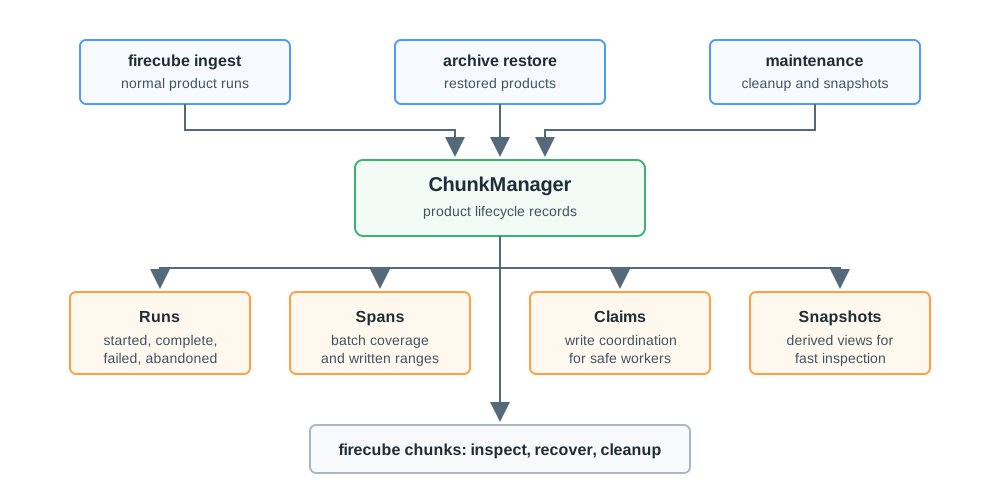
firecube chunks reads those records when you inspect, recover, or clean up a product.What It Records
- Runs record one ingestion or maintenance execution and whether it started, completed, failed, or was abandoned.
- Spans record what a batch wrote, usually with group, time, index, or coverage information.
- Claims coordinate write domains so conflicting work does not write the same product area at the same time.
- Snapshots are derived read models used by inspection and cleanup commands. They can be rebuilt from the authoritative run history.
Why It Matters
- Resume checks use ChunkManager before Firecube writes anything.
- Parallel writes use claims and spans to avoid conflicting work.
- Cleanup uses recorded spans instead of guessing from storage paths.
- Inspection commands show product history without requiring you to open the output format directly.
What To Do With It
Start with inspection:
Then use the operation page that matches what you found:
- Inspect for detailed lists of records, runs, claims, and snapshots.
- Recover Runs And Claims when a run is stuck or a claim is stale.
- Delete And Reingest when records or storage data need cleanup.
- Snapshots when snapshots are missing, stale, or need rebuilding.
Do not edit ChunkManager records by hand.
Next Steps
- ChunkManager Operations — inspect, recover, delete, rebuild snapshots, or migrate a product
- Product Storage — understand targets, drivers, and write modes
- Storage & ChunkManager — return to the product storage model
- Glossary — check related terms such as run, span, claim, and snapshot